
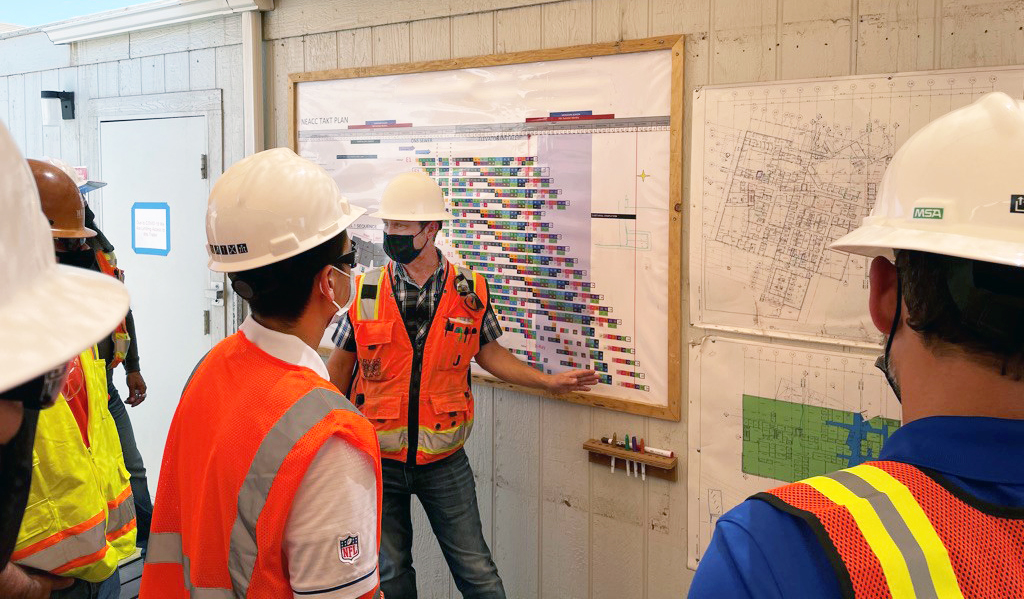
- Introduction
The Last Planner® System (LPS), introduced in the 2000s in the United Kingdom, is a comprehensive system designed to implement lean construction principles. It encourages detailed planning as the execution of a task approaches, ensuring efficient workflow and collaboration. The “last planner” refers to the person responsible for assigning tasks to workers at the appropriate time while verifying the availability of necessary materials, equipment, and information. In design stages, this role may be filled by architects and design engineers, while foremen and inspectors typically assume the role during construction phases. The last planner also monitors and communicates the transition between project phases. This system emphasizes shared responsibility, ensuring that all stakeholders are active contributors. - Executive Summary
The Last Planner® System is a holistic framework within lean construction that enables detailed planning as project execution nears. The “last planner” designates tasks to workers, verifies readiness (materials, equipment, permits, etc.), and ensures smooth workflows. By optimizing resource use, this system reduces waste and fosters a dynamic, self-improving environment.
The system’s core processes—should-can-will-did-learn—define its operation:
⦁ Should: Define what needs to be done (pull-planning principles focus on performing work only when demand exists).
⦁ Can: Ensure readiness by addressing obstacles (permits, designs, materials, labor, etc.).
⦁ Will: Commit to short-term weekly plans.
⦁ Did: Review daily progress and deviations.
⦁ Learn: Reflect on shortfalls to prevent future issues.
Unlike traditional systems where plans are imposed by a planner and executed without active input from workers, LPS involves all stakeholders in the planning process, encouraging collaboration. In contrast to reactive management, LPS identifies root causes of non-performance and proactively mitigates them, fostering continuous improvement.
Integration of this system demands openness to learning, productivity, and consistency. However, its effectiveness grows with each application. It is important to note that every plan is an estimate, and the longer the planning horizon, the greater the risk of inaccuracies. The Last Planner® System mitigates this by creating adaptive plans, removing obstacles, assigning tasks individually, making short-term commitments, and continuously learning from errors and deviations. - Definition, Principles, and Advantages
To understand this concept, refer to the accompanying schematic diagram, which highlights the interconnectedness of all steps. Early and collaborative involvement of design and construction planners enhances effectiveness.
⦁ Step 1: Production Sequence Key dates, milestones, and delivery timelines are established collaboratively.
⦁ Step 2: Pull Planning The workflow for the next 6–12 weeks is determined. Pull-planning focuses on delivering work based on demand and avoids pushing unnecessary tasks. It ensures the process begins with end requirements and cascades to specific team commitments.
⦁ Step 3: Ready-to-Build Obstacles for upcoming tasks are addressed, ensuring readiness. Specific individuals are tasked with removing these obstacles and providing clear commitments.
⦁ Step 4: Weekly Work Plan Weekly plans are made and evaluated for adherence, emphasizing accountability and leveraging peer influence to encourage performance. Visual tools like the Kanban system enhance clarity.
⦁ Step 5: Learning and Reflection Regular reviews—daily meetings and Percent Plan Complete (PPC) charts—ensure transparency and foster a culture of learning from successes and failures.
The key to success lies in consistent application and fostering a team-oriented mindset. Proper communication and understanding among all “last planners” is essential for the system’s success.
Advantages and Challenges
Advantages
⦁ Improved problem anticipation and proactive resolution.
⦁ Reduced stress through distributed workload.
⦁ Stabilized workflow and minimized disruptions.
⦁ Enhanced collaboration and shorter project timelines.
⦁ Better safety statistics and proactive control mechanisms.
⦁ Applicability to all types of projects.
⦁ Enhanced value creation and decentralized decision-making.
Challenges
⦁ Resistance to long-term planning due to workload pressures.
⦁ Role ambiguity causing confusion between planners and assigners.
⦁ Difficulties in monitoring tasks due to inadequate equipment or techniques.
⦁ Lack of experience among workers and frequent workforce turnover.
⦁ Limited integration with traditional systems.
⦁ Incomplete understanding of the theoretical aspects of the system.
- Conclusion
The Last Planner® System is an effective management framework that incorporates lean construction principles to ensure efficient workflow and collaboration. It transforms construction planning into a dynamic and participatory process where every team member contributes to the plan’s success. While openness to learning, productivity, and consistency are essential for implementation, the system’s impact grows exponentially with regular use. By emphasizing short-term, detailed planning, removing obstacles, fostering accountability, and learning from deviations, LPS sets a new standard for project management in the construction industry. - References
⦁ Richert, Tom. “What Is the Last Planner System?” Lean Construction Blog, May 24, 2017. ⦁ Lean Construction Blog.
⦁ “Pull Planning.” Lean Consulting. ⦁ Lean Consulting.
⦁ Ballard, H.G. The Last Planner System of Production Control. Ph.D. Thesis, The University of Birmingham, UK, 2000.
⦁ “Last Planner System.” Designing Buildings Wiki. ⦁ Designing Buildings Wiki.
⦁ NEHP. “Last Planner System (LPS) and the Construction Industry.” ⦁ NEHP Blog.